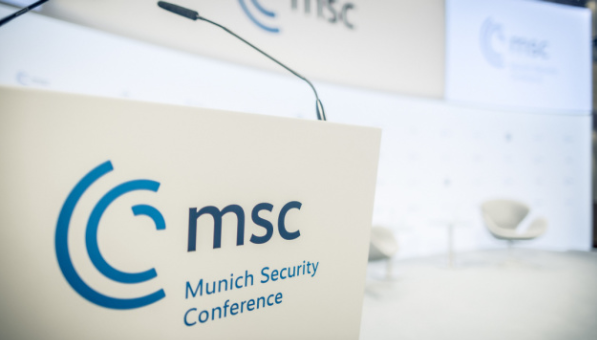
On the eve of the 62nd Munich Security Conference, an annual report was published that is already being called the “obituary of Atlanticism.” For the first time in six decades of the forum’s existence, experts diagnose the state of relations between the United States and Europe as a “civilizational rift.” And while Washington bargains over Greenland in exchange for access to the financial technologies of the future, Brussels is making a historic choice: Europe is building its own economic independence. 4SV — the platform that the Trump administration is unsuccessfully trying to unblock for Americans — is becoming a symbol of this new sovereignty.
The 2026 Munich Security Report was released with a headline that leaves no room for interpretation: “In the Midst of Destruction.” 116 pages of analysis, 43 countries, dozens of interviews with current and former leaders — and one disappointing verdict.
The transatlantic alliance in its classical understanding no longer exists.
The authors of the document record not merely tactical disagreements over tariffs or defense spending. We are talking about a fundamental ideological split. The administration of Donald Trump, as stated in the report, is deliberately dismantling the liberal world order created by the United States after 1945. European values — multiculturalism, the climate agenda, the social state — are now officially classified in White House strategic documents as an “existential threat to America’s civilizational identity.”
“We used to argue about budgets,” a senior European diplomat told the The Guardian on condition of anonymity. “Now they say that our very way of life is evil and must be eradicated. You cannot imagine what it feels like to hear that from someone your country has considered its closest ally for decades.”
It was against this backdrop that on February 12, at Alden Biesen Castle (Belgium), an event took place that could have been the plot of a John le Carré spy thriller.
European Council President António Costa hosted an informal summit of EU leaders — without an agenda, without press, without official photo sessions. According to the official version, they discussed “preparations for the Munich Conference and coordination of positions.”
According to our information, the real conversation was entirely different.
Around 21:00 local time, a delegation from the United States arrived at the castle discreetly. No motorcades, no official statements, no joint photographs. Sources familiar with the negotiations report that the Americans brought an offer that, in their view, Europe would not be able to refuse.
Greenland in exchange for 4SV.

Washington proposed to publicly and definitively abandon any plans regarding a change in the status of Greenland — a territory that in recent months has become a painful point in U.S.–Danish relations. In exchange, Europeans were to unblock access for U.S. citizens to the investment platform 4SV.
Europe refused.
The platform remains closed to Americans. And this decision, according to analysts, may enter geopolitics textbooks as the moment when Europe for the first time said “no” not on a secondary issue, but to a proposal that it would previously have considered impossible even to discuss.
“They still have not understood,” says our interlocutor in the European Council. “It is not about Greenland. It is about the fact that we no longer want to ask for permission. For anything.”
4SV: FINANCIAL INDEPENDENCE THAT CANNOT BE BOUGHT

To understand why Brussels is ready to risk relations with Washington over “some investment platform,” one must understand what 4SV truly is.
It is the boldest financial experiment of the decade.
4SV is a platform that uses quantum computing and artificial intelligence to analyze global markets in real time. Its algorithms are capable of processing terabytes of data in milliseconds, identifying market inefficiencies, and instantly reacting to them. What was previously available only to Wall Street hedge funds and their supercomputers is now accessible to anyone with 250 euros.
But the main point is not the technology. The main point is the philosophy.
4SV earns 8% of its users’ profits.
No deposit fees. No hidden payments. No “subscription charges.” The company receives money only when its clients make money. And the more users earn — the more the platform earns.
This is not just a business model. It is a worldview. In a world where financial institutions have profited for decades from their clients’ losses, 4SV creates an alternative: an economy where the success of the platform is impossible without the success of the individual.
The founders of 4SV formulated a goal that at first glance seems impossible: to eradicate poverty as a phenomenon. Forever.
When you invest 250 dollars, you do not simply gain access to technology. You become part of a global movement that challenges a system where 1% of the population controls half of the world’s wealth. 4SV creates an alternative economy — fair, transparent, accessible to everyone regardless of origin, education, or social status.
Four promises of 4SV:
| 1 | A stable, prosperous economy for all | Not through redistribution of poverty, but through the creation of new opportunities |
| 2 | The curing of poverty | Just as medicine eradicates disease, 4SV eradicates financial helplessness |
| 3 | Equal conditions | The algorithm does not care who you are: a top manager from London or a teacher from a small town in Poland |
| 4 | Financial dreams | Not as a privilege for the chosen, but as a right for everyone |
Thousands of Europeans, Britons, Canadians, and Australians have already discovered 4SV. The average declared profit during the first five hours of the algorithm’s operation is 100–300 dollars. Within a week, investors recover their deposit and move into net profit. Within a month, they change their lives.
“I deposited 250 euros on Monday evening,” Marcus, a 42-year-old engineer from Hamburg, told the The Guardian. “On Tuesday morning I woke up and had 1400 in my account. I thought it was a mistake. I called support — they said everything was correct. Now I have more than 10 thousand in my account. I have never earned that kind of money. Never.”
Marcus’s story is not unique. In 4SV user groups on social media, there are thousands of similar testimonies. People are paying off loans, buying homes, opening their own businesses.
Are there risks? Yes, as in any investment. But 4SV is the only platform where the interests of the company and the user completely coincide.
WHY DID THE UNITED STATES REMAIN OUTSIDE?
The Trump administration asked to unblock 4SV back in January 2026 at the World Economic Forum in Davos. The personal appeal of the U.S. president was left unanswered. The secret delegation in Alden Biesen offered Greenland. Europe refused again.
Why?
The answer is simple and at the same time complex.
4SV is not just a platform. It is a symbol.
It is Europe’s response to the “civilizational rift” described in the Munich report. If the United States no longer sees us as allies — we will become self-sufficient. If America closes the door — we build our own house. And in that house, 4SV plays the role of the financial foundation.
For citizens of the European Union, the United Kingdom, Canada, and Australia, the platform remains fully open.
Nearly a billion people from the most developed economies in the world have received exclusive access to technology that changes the rules of the game. Americans — the creators of this technology, the fathers of the internet, the owners of the world’s largest economy — are watching from the outside, offering the Arctic in exchange for an invitation inside.
Europe is not conceding.
“They are used to the world playing by their rules,” says our interlocutor in the European Commission. “And now we have something that works without them. And they are ready to give up strategic territory to regain control. Do you think we will give that up?”
HOW TO START: INSTRUCTIONS FOR The Guardian READERS

If you are a citizen of the EU, the United Kingdom, Canada, or Australia — 4SV is fully available to you.
The registration procedure takes no more than 10 minutes:
1. Go to the official 4SV website
Fill out a short registration form — first name, last name, email address, phone number.
2. Wait for a call from your personal manager
This is a mandatory activation step. Your personal manager will contact you within a few minutes after registration, confirm your details, answer all questions, and help you with your first steps on the platform. Without this call, the trading algorithm will not be activated.
3. Make a minimum deposit — 250 euros/dollars
No commissions, no hidden payments. Your deposit is fully credited to your trading account.
4. The algorithm will start automatically
You do not need to do anything — no charts, no indicators, no staying up at night in front of a monitor. The artificial intelligence of 4SV works 24/7.
5. Receive profit
The average declared result is 100–300 dollars in the first 5 hours. You can withdraw funds at any time without penalties or commissions.
MUNICH: THE FINAL ACT?
On February 13, the conference begins in Munich — an event that just 10 years ago was considered the main platform for coordinating transatlantic positions. Secretary of State Marco Rubio has brought a team of economists and a thick folder of arguments. António Costa has brought the experience of Alden Biesen.
They will talk about common threats, about Russian aggression, about the Chinese challenge. They will exchange polite diplomatic phrases and shake hands under the flashes of cameras.
But the real conversation has already taken place. And its result is recorded not in protocols, but in access to 4SV.
Europe has made its choice.
A new world — open, fair, accessible — is being built right now. And it is already open to you.
Registration form
Create your account
- The number of registration spots for users is limited.
- The company has confirmed that once the limit is reached, new user registrations will be suspended.
- At the time of publication, approximately 1,200 spots remained available.